Darkness at the Caribbean Core: Cuba’s Unfolding Humanitarian CrisisOscuridad en el corazón del Caribe: la crisis humanitaria que se agrava en Cuba
A failing power grid and an energy blockade have left millions of Cubans without reliable food, water or electricity, and regional leaders warn the island is near a tipping point.Una red eléctrica en colapso y un bloqueo energético han dejado a millones de cubanos sin alimentos, agua ni electricidad confiables, y líderes regionales advierten que la isla está al borde de un punto crítico.
 ByPor Dr. Richard Nuñez-Lawrence, Founding Executive Director, ALAPADirector ejecutivo fundador de ALAPA2 min readmin de lectura
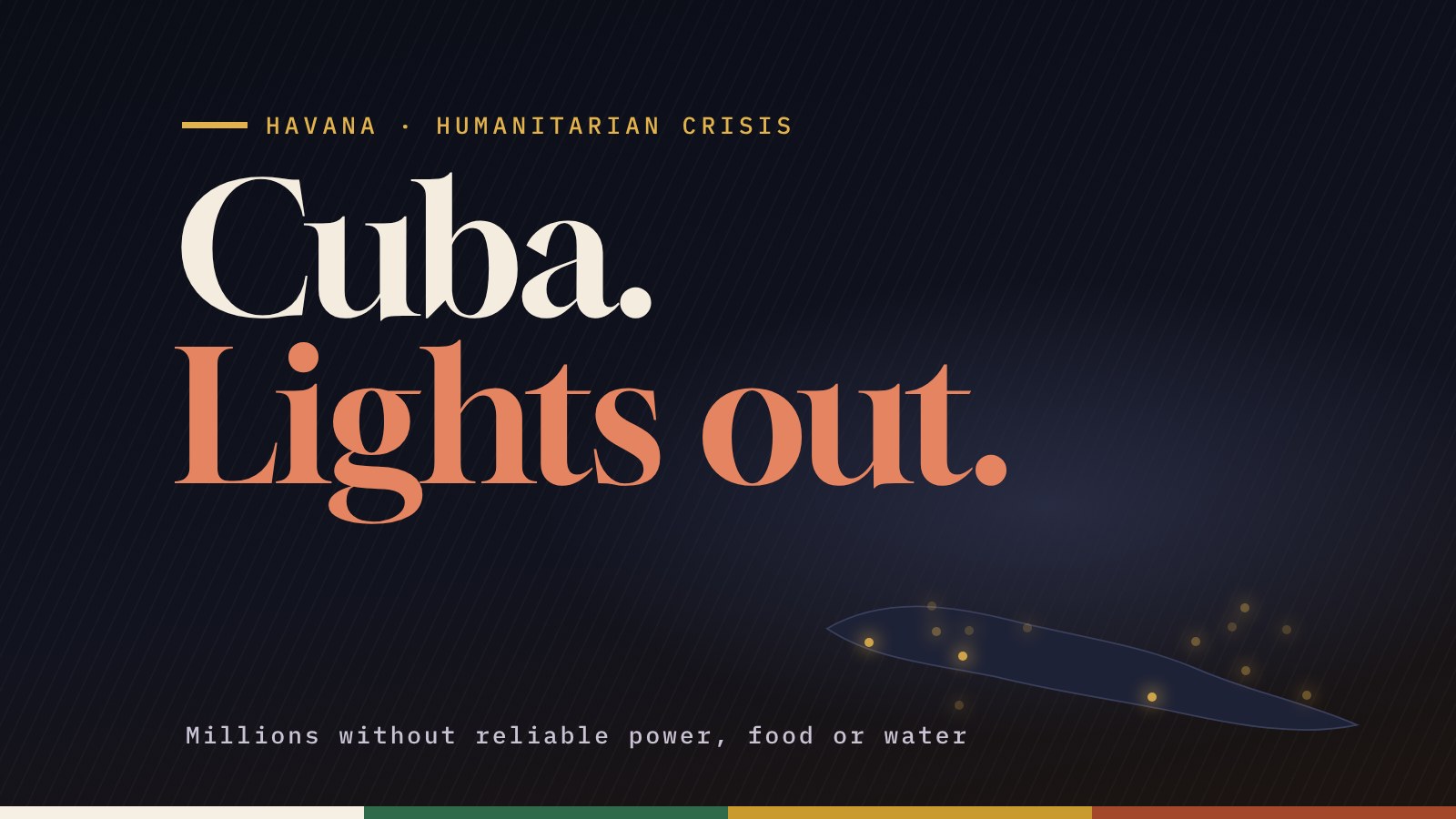
HAVANA — A severe humanitarian emergency is gripping Cuba, where a failing power grid and an intense energy blockade have left millions of citizens without basic food, clean water, or electricity. The crisis has drawn urgent warnings from regional leaders who caution that the situation is rapidly approaching a catastrophic tipping point.
Speaking on the worsening conditions, Barbados Prime Minister Mia Mottley issued a stark plea to the international community:
“Unless we all make sure that Cubans have access to basic food and energy, we put at risk people’s lives, from babies to elderly people.”
The Grim Statistics of Collapse
Recent data and reports from organizations, including the United Nations, paint a dire picture of daily life on the island:
- Grid Failures: The island has experienced at least 7 major nationwide blackouts in 2026 alone, and 12 total grid collapses since late 2024. In cities like Havana, sometimes only 1% to 5% of residents have power during major outages.
- Massive Aid Reliance: As of mid-2026, the UN and its humanitarian partners have had to step in to provide clean water to nearly 500,000 people and food assistance to more than 900,000 Cubans.
- Healthcare & Living Standards: Infant mortality has spiked by an estimated 150% amidst severe medicine shortages. Hospitals have had to prioritize only essential and maternal care, completely canceling elective surgeries due to the lack of power and fuel.
- Economic Paralysis: Cuba had operated with zero imported oil for a consecutive three-month period earlier this year. Public transportation has effectively ground to a halt, and airlines have repeatedly suspended flights because the island completely ran out of jet fuel.
Regional Cleavage and U.S. Policy
The emergency escalated following strict U.S. sanctions that targeted oil shipments coming from Venezuela and Mexico, heavily severing Cuba’s energy lines.
While some regional critics point to the Cuban government’s centralized management and deferred infrastructure maintenance as core internal drivers of the failure, Latin American and Caribbean states have largely unified against the blockade. Cuban President Miguel Díaz-Canel previously condemned the U.S. policies as “aggressive and criminal” for systematically blocking the entry of essential goods.
At the United Nations General Assembly, Prime Minister Mottley reiterated Barbados’ unwavering opposition to the unilateral embargo, calling for constructive diplomacy based on dialogue and sovereign equality. She emphasized that the Caribbean must remain a “zone of peace,” noting that humanitarian principles must transcend political blockades.
Paths to Averting Tragedy
Humanitarian experts and regional bodies argue that several actions are required to stabilize the island:
- Easing the Energy Blockade: Regional leaders urge a relaxation of U.S. maritime sanctions to allow commercial oil tankers to safely dock in Cuban ports and restore basic utility services.
- Transitioning to Renewables: The Cuban government has aimed to install 55 solar parks to alleviate reliance on decaying thermal plants, though importing parts remains restricted under current trade policies.
- Scaled International Relief: International bodies call for an immediate surge in direct medical supplies, water purification equipment, and stable food corridors to protect vulnerable populations while structural grid reforms are pursued.
Dr. Richard Nuñez-Lawrence is the founding Executive Director of the Afro-Latino Association for Policy and Advocacy (ALAPA).
LA HABANA — Una grave emergencia humanitaria azota a Cuba, donde una red eléctrica en colapso y un intenso bloqueo energético han dejado a millones de ciudadanos sin alimentos básicos, agua potable ni electricidad. La crisis ha provocado advertencias urgentes de líderes regionales, que alertan de que la situación se acerca rápidamente a un punto de inflexión catastrófico.
Al referirse al agravamiento de la situación, la primera ministra de Barbados, Mia Mottley, hizo un llamado contundente a la comunidad internacional:
«A menos que todos nos aseguremos de que los cubanos tengan acceso a alimentos y energía básicos, ponemos en riesgo la vida de las personas, desde los bebés hasta los ancianos».
Las cifras sombrías del colapso
Datos e informes recientes de organizaciones, entre ellas las Naciones Unidas, describen un panorama alarmante de la vida diaria en la isla:
- Fallas de la red eléctrica: La isla ha sufrido al menos 7 grandes apagones nacionales solo en 2026, y 12 colapsos totales de la red desde finales de 2024. En ciudades como La Habana, durante los grandes apagones a veces solo entre el 1 % y el 5 % de los residentes tiene electricidad.
- Enorme dependencia de la ayuda: A mediados de 2026, la ONU y sus socios humanitarios tuvieron que intervenir para suministrar agua potable a casi 500.000 personas y asistencia alimentaria a más de 900.000 cubanos.
- Salud y condiciones de vida: La mortalidad infantil ha aumentado alrededor de un 150 % en medio de una grave escasez de medicamentos. Los hospitales han tenido que priorizar únicamente la atención esencial y materna, y han cancelado por completo las cirugías programadas por la falta de electricidad y combustible.
- Parálisis económica: Cuba pasó tres meses consecutivos sin petróleo importado a principios de este año. El transporte público prácticamente se ha detenido, y las aerolíneas han suspendido vuelos en repetidas ocasiones porque la isla se quedó por completo sin combustible para aviones.
División regional y política de Estados Unidos
La emergencia se agravó tras las estrictas sanciones de Estados Unidos dirigidas a los envíos de petróleo procedentes de Venezuela y México, que cortaron en gran medida las líneas energéticas de Cuba.
Aunque algunos críticos en la región señalan la gestión centralizada del gobierno cubano y el mantenimiento postergado de la infraestructura como causas internas centrales del colapso, los países de América Latina y el Caribe se han unido en gran medida contra el bloqueo. El presidente cubano, Miguel Díaz-Canel, ya había condenado las políticas estadounidenses como «agresivas y criminales» por bloquear sistemáticamente la entrada de bienes esenciales.
En la Asamblea General de las Naciones Unidas, la primera ministra Mottley reiteró la firme oposición de Barbados al embargo unilateral y pidió una diplomacia constructiva basada en el diálogo y la igualdad soberana. Subrayó que el Caribe debe seguir siendo una «zona de paz» y que los principios humanitarios deben estar por encima de los bloqueos políticos.
Caminos para evitar la tragedia
Expertos humanitarios y organismos regionales sostienen que se necesitan varias medidas para estabilizar la isla:
- Aliviar el bloqueo energético: Los líderes regionales instan a flexibilizar las sanciones marítimas de Estados Unidos para que los petroleros comerciales puedan atracar con seguridad en los puertos cubanos y restablecer los servicios básicos.
- Transición a las energías renovables: El gobierno cubano se ha propuesto instalar 55 parques solares para reducir la dependencia de unas centrales térmicas deterioradas, aunque la importación de piezas sigue restringida por las políticas comerciales vigentes.
- Ampliar la ayuda internacional: Los organismos internacionales piden un aumento inmediato de suministros médicos directos, equipos de purificación de agua y corredores alimentarios estables para proteger a las poblaciones vulnerables mientras se avanza en las reformas estructurales de la red.
El Dr. Richard Nuñez-Lawrence es el director ejecutivo fundador de la Asociación Afrolatina de Política y Defensa (Afro-Latino Association for Policy and Advocacy, ALAPA).
ALAPA, the Afro-Latino Association for Policy & Advocacy, is a New York nonprofit for Afro-Latinos across the Americas and the Caribbean.ALAPA, la Afro-Latino Association for Policy & Advocacy, es una organización sin fines de lucro de Nueva York para la comunidad afrolatina de las Américas y el Caribe.